The other caffeine.
Chocolate has caffeine too. But that’s not the whole story.
You skipped the coffee because it’s 9pm.
Very sensible.
Then you ordered the chocolate cake.
And a chocolate drink.
We should probably talk.
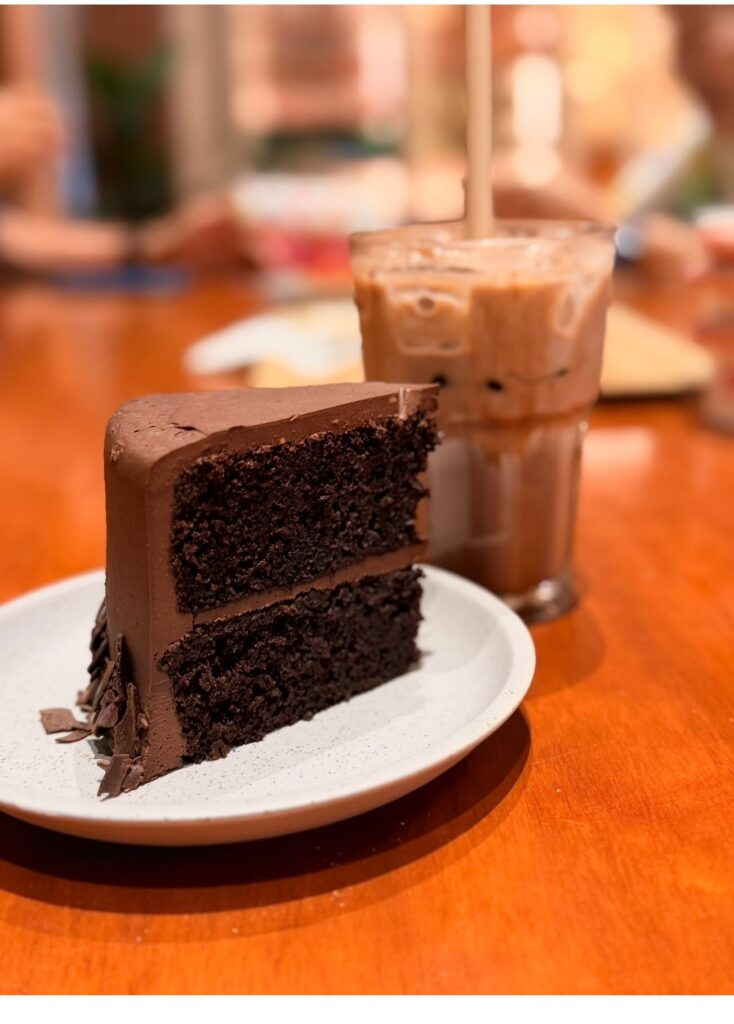
Wait. Chocolate has caffeine?
Yes.
Coffee and tea get most of the attention, but cacao naturally contains caffeine too. Which means dark chocolate, milk chocolate, cocoa and anything made with enough of them may bring a little caffeine along for the ride.
Usually, not coffee-sized amounts.
But not zero either.
A 40g serving of dark chocolate, for example, can contain roughly 25–35mg of caffeine. The exact amount varies with the cacao and the product.
For comparison, an ordinary cup of coffee can easily contain several times that amount.
So no, a few squares of dark chocolate are not secretly an espresso.
But they’re not exactly caffeine-free dessert either.
Meet caffeine’s quieter cousin.
Here’s where chocolate gets more interesting.
Cacao doesn’t just contain caffeine. It contains another closely related compound called theobromine.
Despite the name, there is no bromine involved. The name comes from Theobroma cacao, the scientific name of the cacao tree.
And chocolate contains quite a lot of it.
In that same 40g serving of dark chocolate, there may be around 200–300mg of theobromine — far more than the amount of caffeine.
Caffeine and theobromine belong to the same family of compounds, the methylxanthines, but they don’t affect us in exactly the same way.
Caffeine’s effect on alertness is well established. Theobromine appears to have milder and somewhat different effects, and researchers are still studying exactly how much it contributes to that familiar chocolate lift.
Coffee is mostly a caffeine story.
Chocolate is a caffeine-and-theobromine story.
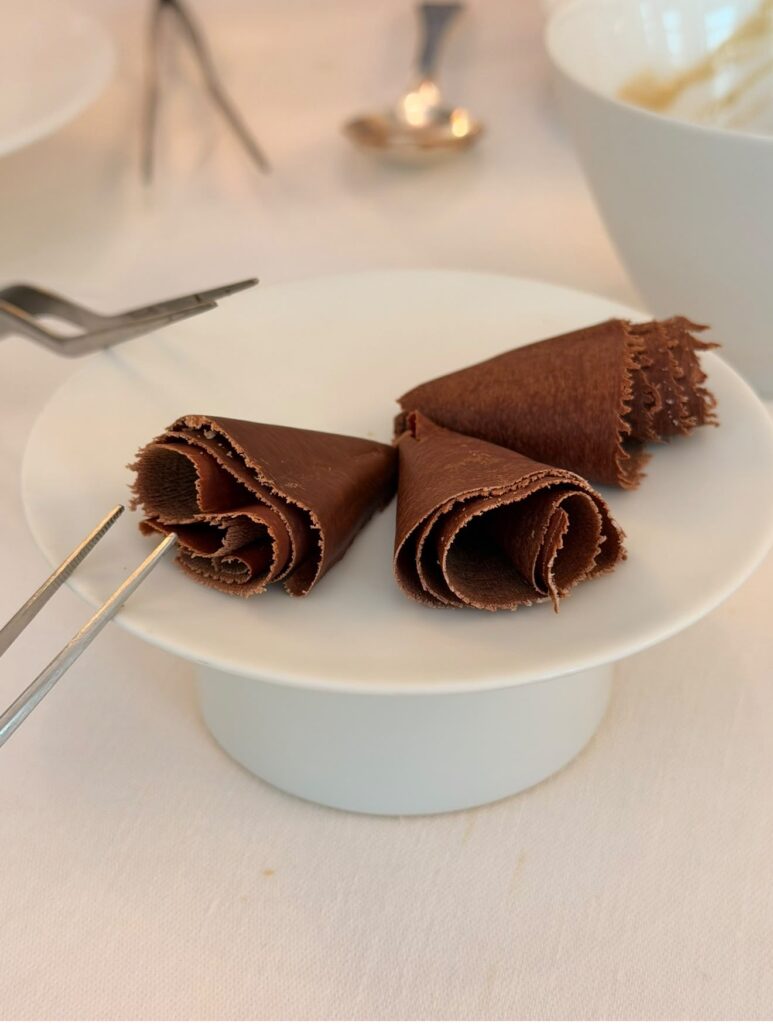
Dark, milk or white?
As a rough rule, the more cocoa solids a chocolate contains, the more opportunity there is for caffeine and theobromine to come with them.
That gives us a useful hierarchy.
Dark chocolate generally has the most.
Milk chocolate generally has less.
White chocolate is the odd one out.
White chocolate is made with cocoa butter rather than the dark cocoa solids that carry most of cacao’s caffeine and theobromine. So its caffeine contribution is generally negligible.
This also explains why an 85% dark chocolate bar and a white chocolate bar may both say chocolate on the packet while being very different propositions at 11pm.
So does 85% mean more caffeine than 70%?
Probably more, all else being equal.
But don’t turn the percentage on the wrapper into a caffeine calculator.
The cacao percentage tells you how much of the product comes from cacao ingredients. It does not tell you exactly how many milligrams of caffeine are inside.
Cacao variety, fermentation, processing and the particular recipe can all affect the final amount.
Higher cacao percentage = useful clue.
Higher cacao percentage = exact caffeine measurement? No.
We like numbers at Caffeine.sg.
We just don’t like pretending they’re more precise than they are.
What about hot chocolate?
Ah.
The classic bedtime drink.
Hot chocolate made with cocoa contains caffeine and theobromine too.
The caffeine amount can be quite modest — particularly compared with coffee — but it depends enormously on how the drink is made.
An instant chocolate drink containing a relatively small amount of cocoa is one thing.
A café drinking chocolate made with a generous amount of dark chocolate is quite another.
Which is why asking, “How much caffeine is in hot chocolate?” is a little like asking how much caffeine is in coffee.
Which one? How much? Made how?
There isn’t one universal number.
And then there’s mocha.
Mocha is where the two worlds meet.
Coffee brings caffeine.
Chocolate brings some more caffeine, plus theobromine.
So if a café makes a mocha using the same espresso shots as its latte, the espresso is still likely doing most of the caffeine heavy lifting.
The chocolate isn’t irrelevant.
It’s just not normally the main event.
Espresso + milk + chocolate + a small caffeine bonus nobody asked about.
Delicious accounting.
Can chocolate actually keep you awake?
It can contribute.
Whether you’ll notice is another question.
Caffeine sensitivity varies enormously between people, and the amount of caffeine in chocolate varies enormously between products.
Someone who can drink kopi after dinner and sleep peacefully may never give their chocolate dessert a second thought.
Someone who already knows that a 4pm coffee was a terrible life decision may want to pay more attention.
And quantity matters.
One square of dark chocolate is not the same thing as half a bar.
Neither is a chocolate biscuit the same thing as a rich dark-chocolate dessert followed by a large hot chocolate.
Caffeine has a habit of being less interesting individually than collectively.
Coffee.
Tea.
Cola.
Chocolate.
Dessert.
Another chocolate because the first one was small.
It all counts.
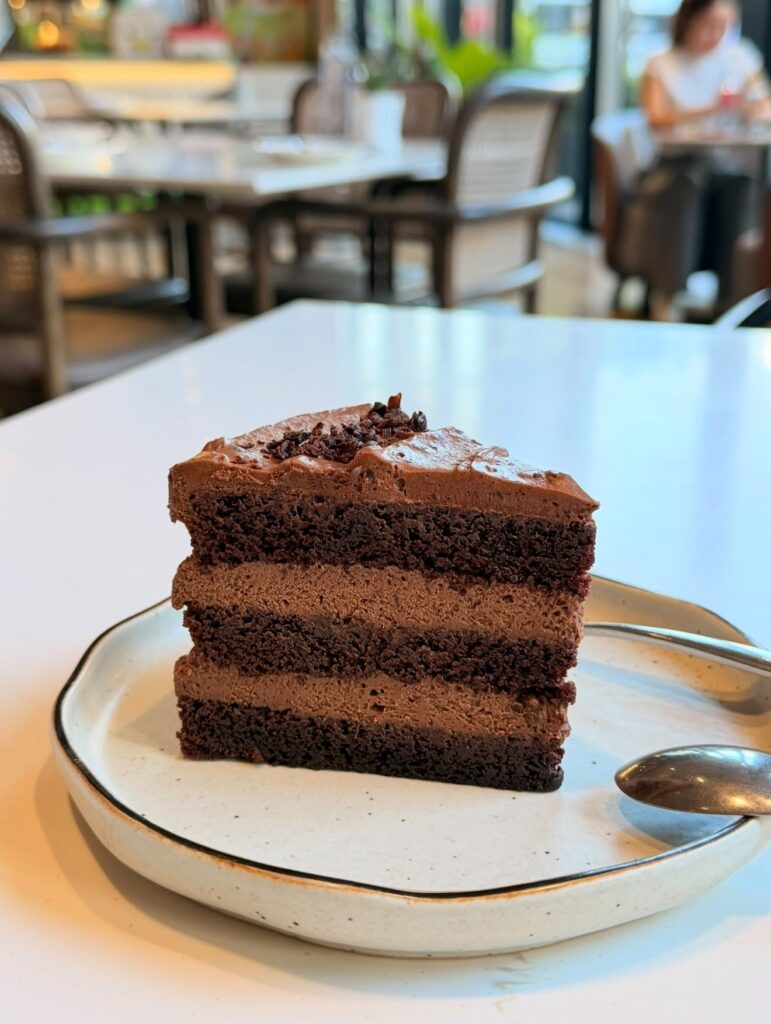
The rough caffeine hierarchy.
There is too much variation between products to pretend these are exact equivalents, but as a mental model:
White chocolate
Essentially negligible caffeine.
Milk chocolate
A little.
Dark chocolate
More — a 40g serving may contain roughly 25–35mg.
Hot chocolate
Usually modest, but highly recipe-dependent.
Tea
Now we’re getting into more substantial caffeine territory.
Coffee
Usually considerably more.
Mocha
Mostly the caffeine from its espresso, with chocolate adding a little more.
The important word throughout this list is usually.
Caffeine is agricultural. Coffee beans vary. Tea varies. Cacao varies. Serving sizes vary. Recipes vary.
A beautifully precise number printed on the internet can still be precisely wrong for the cup sitting in front of you.
So should I stop eating chocolate at night?
We’re Caffeine.sg.
We’re not taking away your dessert.
For most people, chocolate contains much less caffeine per normal serving than coffee. But if you’re sensitive to caffeine, eating a decent amount of dark chocolate late at night isn’t necessarily the same as having “no caffeine”.
And that’s really the interesting part.
We tend to think of caffeine as something that lives in a cup.
Coffee.
Tea.
Energy drinks.
But caffeine is a molecule made by plants.
Sometimes it’s in your drink.
Sometimes it’s in your dessert.
And sometimes you skip the 9pm coffee, congratulate yourself on making a responsible adult decision, and order the dark chocolate cake.
The caffeine noticed.